

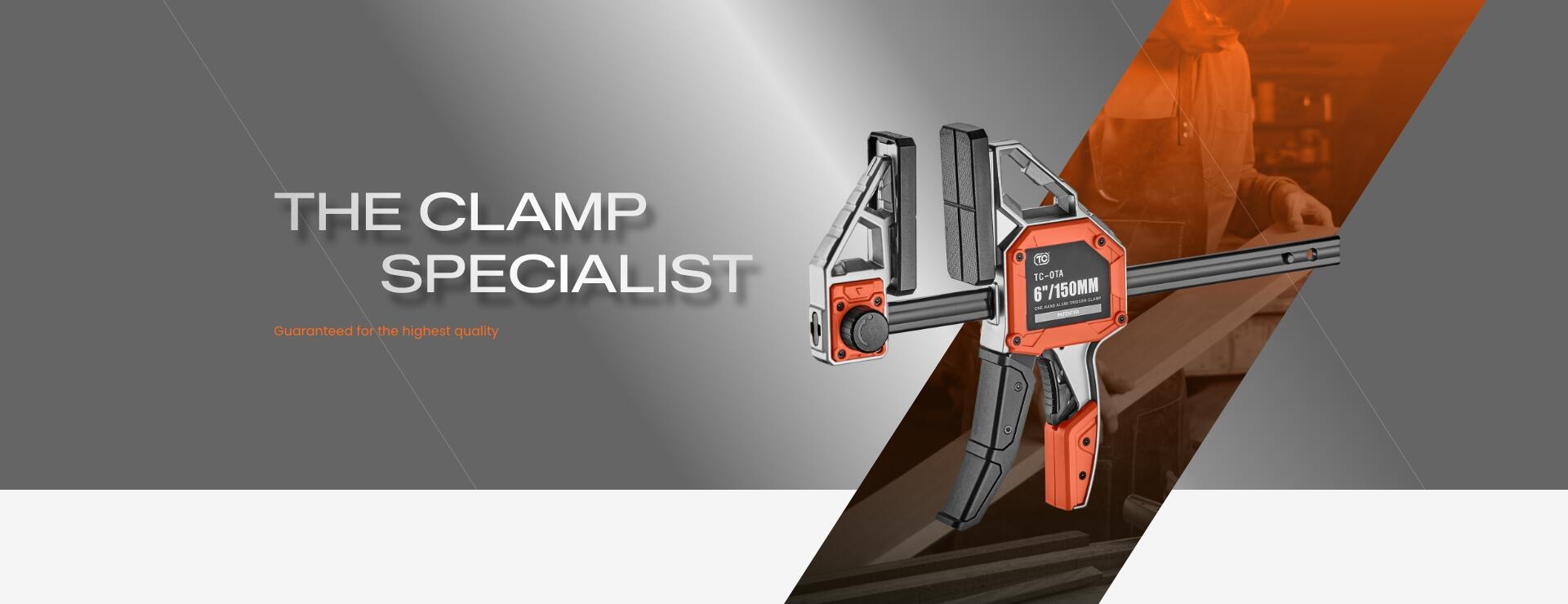

In woodworking, interior renovation, and metalworking, a clamp is a core partner that directly determines work quality and safety. However, clamp prices on the market range from a few dollars to few hundreds, and while they may look similar on the surface, their quality varies drastically. Substandard clamps are not only prone to breaking or slipping—they can also drop, cause injuries, or ruin expensive workpieces.
As clamping specialists with over 30 years of R&D and manufacturing experience, we are revealing the 4 key indicators to tell a good clamp from a bad one and guiding you on how to buy the most suitable clamp for your needs!
Expert Advice: 4 Key Details to Identify Clamp Quality
When evaluating clamp quality, never rely solely on appearance or price. Observe these 4 essential material and structural details:
1. Body Material & Structural Strength
- Substandard Clamps: Unbranded or cheap products often use substandard plastics or metals of unknown origin to achieve unbelievably low prices. Many of these inferior plastics and metals often contain heavy metals, phthalates, or other hazardous substances that can absorbed into the body through skin contact. Furthermore, low-grade plastics lack structural strength, causing the body to bend noticeably or snap directly under pressure.
- Quality Clamps: Reliable professional clamps utilize high-strength engineering-grade composites nylon or good quality metals that can withstand repeated heavy clamping forces without deformation. All raw materials should be fully traceable to the source and strictly comply with international safety regulations such as REACH and RoHS, ensuring a peace of mind.
2. Steel Bar Quality & Surface Treatment
- Substandard Clamps: The steel bar uses low-grade steel without sufficient thickness that bends easily under pressure. The anti-rust coating is rough and peels or easily rusts over time. Most noticeably, when compared within the same tier, inferior clamps yield 30% - 40% less clamping force than top-tier brands.
- Quality Clamps: High-grade carbon steel or alloy steel is used and undergoes specialized heat-treatment hardening to ensure precise locking without slipping. High-spec anti-rust surface treatments guarantee long service life. Good steel from reputable source can be produce Proof of origin, factory certificate, Quality control report, Mill test certification and Radiation-free certification.
3. Mechanism & Clamping Force
- Substandard Clamps: Assembled parts or spindles have poor precision and excessive clearance, resulting in rough operation. Squeezing requires immense strength yet yields minimal clamping force, making workpieces prone to shifting or slipping due to insufficient hold.
- Quality Clamps: Engineered with precision drive mechanisms and high-spec springs or internal components, these clamps ensure smooth, labor-saving operation while consistently delivering hundreds of kilograms of powerful clamping force.
4. Jaw Pads & Anti-slip Design
- Substandard Clamps: Protective pads are made from secondary plastics or low-grade soft rubbers that fail to provide protection. They easily slip off, leave severe indentations, or even seeping oil from the pad. These oil from these pads transfers directly onto freshly sanded, beautiful finished wood surface - ruining finished workpieces and forcing costly recutting and re-surfacing.
- Quality Clamps: Equipped with moderately soft yet structurally stable protective pads that distribute pressure evenly. Quality manufacturers invest extra R&D to incorporate anti-slip textures on pad surfaces, ensuring workpieces are securely clamped without slipping, leaving indentations, or seeping oil.
A Buyer’s Guide: How to Choose the Right Clamp
Once you know how to avoid quality traps, simply follow these 3 steps to buy the exact clamp to your needs:
Step 1. Clarify Your Work Scenario & Workforce
- Solo Work / Frequent Positioning: Choose a One-Handed Clamp (Hand Clamp) so you can support the workpiece with one hand while operating and releasing the clamp with the other.
- Machine Cutting / Guide Rail Use: Choose a Quick Clamp (Bar Clamp) featuring fast locking and high clamping force to keep workpieces firmly in place during cutting or machining.
- Framing / Box Assembly: Choose a Parallel Clamp to ensure jaws maintain exact 90° perpendicular contact for uniform, distortion-free clamping.
Step 2. Evaluate Workpiece Size & Clamping Force Needed
- Light DIY / Temporary Positioning: Clamping force of 80 - 150 kgs is generally sufficient.
- Large Panel Gluing / Heavy Woodworking: Requires heavy-duty force of 300 kg or more. A Pipe Clamp or Parallel Clamp is recommended. Pipe Clamps also allow infinite length expansion by changing iron pipe lengths, offering maximum cost-efficiency.
Step 3. Ergonomics, Hand grip & Operational Needs
- Ergonomics: Your initial impression when holding a clamp will determine whether it fits your hand naturally. Excellent ergonomic design significantly reduces hand fatigue and a clear dictation of whether your willingness to use it again for your next project.
- Available Hands: Different work conditions often dictate choice of clamp. For example, traditional F-Clamps are popular and versatile but almost impossible operated with one hand. When you only have one hand, one-handed operation becomes the one critical buying factor.
If you have any questions or need further assistance, please feel free to Contact Us. We are always here to help!