

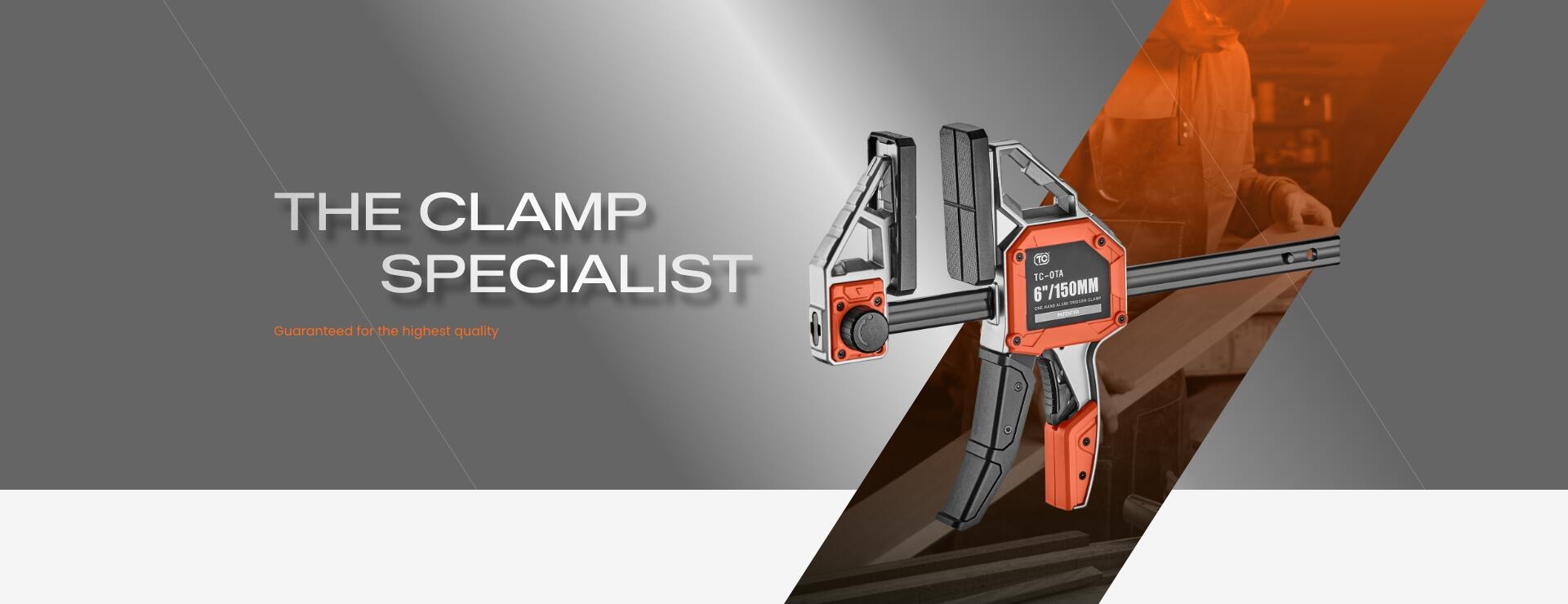
Whether on a professional job site, in a manufacturing plant, or in a home DIY workshop, clamps are handy and even indispensable tools. However, even experienced professionals occasionally fall into common clamping traps. Here are the 5 most common clamping mistakes, their consequences, and how to avoid them:
1. Over-Clamping
The Mistake
Many instinctively think "the tighter, the better" and crank up the pressure. This is a critical misconception.
The Consequences
- Crushed Wood: Excessive force crushes wood fibers and mars the surface.
- Weak Joints: It squeezes out all the glue, creating a weak, starved joint that breaks easily.
- Thin Board Warping: Too much load causes wooden boards to warp. When a thin board warps, areas without direct clamp contact lift up, creating gaps where the glue cannot bond properly.
- Tool Damage: Over-clamping severely shortens the lifespan of your clamp's mechanism.
How to Avoid It
The only goal of clamping is seamless alignment. Instead of over-tightening a single clamp, use multiple clamps spaced out across the workpiece. Multiple clamping points distribute pressure evenly to ensure the entire glued surface bonds perfectly. Stop tightening the moment you see glue squeeze out in small, uniform beads.
2. Improper Misalignment
The Mistake
Clamping at an angle instead of keeping the clamp pads perfectly perpendicular to the wood surface.
The Consequences
When a clamp is not perfectly square, the clamping force becomes a diagonal pushing force. This causes the wood to shift out of alignment during gluing. Once the glue dries, your final workpiece will be crooked.
How to Avoid It
Ensure the clamp pads stay perpendicular to the workpiece and keep the spacing between clamps as consistent as possible. For long or large workpieces, alternate your clamps (clamping from both top and bottom) to counteract directional pulling force.
3. Neglecting Surface Protection
The Mistake
Clamping the jaw directly onto high-end timber, finished cabinetry, or soft wood without any protection in between.
The Consequences
The localized pressure from the clamp leaves irreparable dents, scratches, or marks on delicate wood surfaces. Furthermore, dried glue or metal debris stuck on the clamp pads can ruin the finished surface, forcing you to spend hours resurfacing again, in worst case even scrap the workpiece.
How to Avoid It
Place a piece of wood or a soft pad between the clamp jaw and the workpiece as a protective layer, or use non-marring, solvent-resistant plastic pads, provided by the manufacturer. When using heavy-duty, high-pressure metal clamps, always wedge a piece of scrap wood between the clamp surface and the workpiece to distribute the pressure before tightening.
4. Using the Wrong Tool for the Job
The Mistake
Using a single kind of clamp for every application—such as using a lightweight plastic clamp on heavy wood slab beams, or using heavy-duty F-clamp on delicate, high-precision workpieces.
The Consequences
The common mistake of "using a tool too small for a big job" causes the clamp to snap under overload, leading to workpiece slippage and serious job site hazards. Conversely, "using a tool too big for a small job" makes precise control impossible due to excess tool weight, easily crushing fragile components by accident.
How to Avoid It
Select right clamp based on the material, weight, and required clamping force of your specific workpiece. For large, heavy-duty applications, choose high-strength aluminum or heavy-duty F-clamps (such as TC-OTA, TC-0899, etc.). For interior make over, delicate workpiece, opt for lightweight lamps (such as TC-OTM, TC-OTS, or handy clamps).
5. Neglecting Tool Maintenance
The Mistake
Leaving clamps uncleaned after use. The surfaces—especially the steel bars—get caked with dried wood glue, metal shavings, or dust, only to be stored away until the next job.
The Consequences
Dried glue and grit wedge into the steel bar and internal mechanisms, causing jams or severe wear. When you need high-strength clamping, the tool will fail to bite properly and suddenly slip. This doesn't just ruin your project; it can cause serious personal injury.
How to Avoid It
After every use, blow off dust with an air gun or wipe it down with a dry cloth. Scrape away any dried glue entirely, and regularly apply a light coat of lubricant to the steel bar—WD-40, Spindle Oil, threading lubricant, or even cooking oil will do the job. A high-quality clamp is an investment, and they don't come cheap. Regular maintenance is the only way to make your investment last a lifetime.
If you have any questions or need further assistance, please feel free to Contact Us. We are always here to help!